
by desing | Tools
Once the decision has been made to become a business owner, the next step is to decide where the necessary capital to launch the business will come from. One of the most difficult tasks a prospective entrepreneur has is raising the capital needed for their new business venture. Make sure to research whatever options and opportunities may be available. There are plenty of ways to raise funds for women-owned businesses.
Community Bank loans offer small business owners opportunities to build a relationship in their community. These smaller banks may not offer the same products or services as the larger banks but they are usually open to new business ventures in their community. Research the banks in your area or go to the Independent Bankers Association of America which provides a list of over 5,000 community banks.
Credit cards are the very foundation of small businesses. If bank loans are not an option, check with credit card companies for unsecured credit-line alternatives. VISA and American Express both offer competitive credit-line alternatives.
Reaching out to family and friends is an easy way to raise capital quickly too, especially if the new business venture is too small or too novel to secure bank financing. Although immediate bank funding can be accomplished, the amount awarded is often insufficient to cover all start-up costs. Be sure to consider the problems that can occur between all of the parties.
Grants are a common way for entrepreneurs to obtain financing too. Make sure to have a clear idea about how such funds will be used. In other words, a business plan is imperative! Talking to someone with experience in grant writing is a quick way to get up to speed on how to apply.
Business Investors are an option if the entrepreneur is willing to give up a percentage of the business and possibly some control. Test the waters of how some top investors look at new business opportunities by watching the television show “Shark Tank.”
Strategic partnerships should be considered if the entrepreneur has little or no experience in running a business or raising capital. Seek similar businesses in your area and approach them with a plan for partnering with them. It is important in this scenario to have a detailed plan in place of what you want to do and even more importantly what you have to offer the new company. Some business owners are looking for successors and having a partner come in on the ground level, learn the business, and then take the company over can be an attractive option.
Finally, check with the Small Business Administration in your state. The SBA offers many resources and much important business information on the subject of starting a business. Over the long haul, the SBA can become a valuable resource.
In conclusion, if the passion for starting the new venture matches the entrepreneur’s business acumen, then securing funds should not be a problem. Personal credit history is extremely important for a start-up of course, since that is all the creditors will have in order to properly evaluate the risk of lending funds. Do research on what options are available, then decide which option makes the most sense. Although a business plan is not always necessary, most lenders will want to see how the funds will be used, so consider doing at least a preliminary one.

by desing | Tools
Whether you’re a small business owner, an artist, or any other type of entrepreneur, there is one thing you absolutely must have to make it in today’s crowded, clamorous marketplace: A unique, compelling brand that makes your product or service leap out above the competition.
Consider the brands that speak to you, whether they’re large corporations like Apple or your favorite neighborhood coffee shop. They each have a certain “something” that keeps you coming back. You can relate to them. You feel they can relate to you. And even if they’re slightly more expensive than their competitors, you don’t care—because part of what you’re paying for is the chance to engage with their one-of-a-kind brand.
So. You’ve got your product and service, but now you need a brand identity. How do you create one that will personify your business and really resonate with your customers? Here are a few of the major steps to keep in mind:
Always picture your “ideal” customer. Who did you design your product or service for? Men or women? Young or old? Conventional and classy, or a little cutting edge and risqué? Take the time to envision your one true, ideal customer, and keep them in mind whenever you make a decision about how to present your brand. Speak directly to them. Use language they can relate to. Create a style and design they will find appealing.
Envision the experience you want to provide. Brands reach customers by engaging with them—through social media like Facebook and Twitter, through blogs, through local promotions and events. What do want your customers to experience when they interact with your brand? Do you want them to feel invigorated, relaxed, inspired, comforted? You can evoke those feelings with every element of your brand, from the colors you choose for your logo to the materials you use on the chairs in your restaurant. Every aspect of your brand should wrap your customers up in one cohesive, compelling experience, and it’s that experience that they will remember and, hopefully, want tell all their friends about.
Be willing to be unpopular. I love the book The Power of Unpopular: A Guide to Building Your Brand for the Audience Who Will Love You (and why no one else matters) by Erika Napoletano (affiliate link). As the firecracker voice behind the popular blog Redhead Writing, Erika knows how to build a fiercely loyal fan base. And her secret boils down to a saying you’ve probably heard before: “If you try to please everyone, you wind up pleasing no one.”
Meek or wishy-washy brands don’t get noticed—and they certainly don’t win fiercely loyal clients. Whoever your ideal customer is, you need to be willing to answer their needs, nurture their trust, and speak to their innermost desires. And as a result, there will be plenty of people who don’t connect with—or who even (gasp!) dislike—your brand. So be it. Those are not your true customers, and your true customers are where the money’s at.
In Short
Your customers’ attention is being pulled in so many directions that it takes a real presence to get them to even notice your product or service, let alone to win them over. The key to building a brand that sells is to build a brand that speaks. Know who you’re speaking to, pull no punches in doing so, and you’ll find yourself with a brand that engages and grows.

by desing | Faith & Purpose
“There are too many things to do and not enough time in the day!” If that statement sounds familiar to you, you’re not alone. Our world has become so plugged in and productivity-oriented that it’s no wonder many of us feel overwhelmed most of the time. Between our jobs, our families, our hobbies, and who knows what else, how do you manage to get everything done on time?
The simple answer is: You don’t. That’s right, you read that correctly. There is no way for one person to do everything all the time without burning out, so the first step in becoming truly productive is to let go of the need to “do it all.” Being productive doesn’t mean doing it all; it means making sure the important things get done, and learning to accept that some things will fall through the cracks. (And that that’s okay!)
A great way to figure out how to prioritize your infinite to dos is the well-known “big rocks/little rocks” method.
How It Works
We all have 24 hours in a day. That’s non-negotiable. The key to productivity is deciding the best way to use those 24 hours.
Your bucket: Picture your day as a bucket—a finite, solid container that can only be filled to its brim and no further. Once you’ve hit the top (the end of the day), you’re done. Whatever’s left over will either have to be let go or become a task for another day.
Your big rocks: Your big rocks are the things you absolutely have to get done that day. Going to work, eating, sleeping, and caring for your children are some of the obvious and daily big rocks. Grocery shopping, mowing your overgrown lawn, and going to the doctor are other big rocks you need to get done to keep your life running smoothly. As you’re planning out your day, fill your bucket with these big rocks first. These are the things you’ll do before thinking about anything else on your to do list.
Your small rocks: Your small rocks are the things you’d like to get done, but that won’t throw your world into chaos if you can’t get around to them today. Weeding the garden. Catching up on your e-mail. Picking up that dry cleaning you don’t need immediately. The good thing about small rocks is they can fit in all the little spaces between your big rocks. This means that, once you’re done with your big rocks (or if you’re between big rocks, like waiting at the doctor’s office), you can try to get as many little tasks done as you like. If you can get a bunch done, that’s great! But if you can’t, you still know you’ve done what you needed to that day, because your big rocks have been tended to.
Accept Your Limitations
No one can get to all of their little rocks in one day. Sometimes we’re lucky if we can tackle all the big ones. Accept the fact that you’re only human and that things will come up to derail your schedule. Do as many of the big rocks as you can, and then go easy on yourself by knowing you’ve done the best you could. Tomorrow is another day. Just keep working on those big rocks first, and in the grand scheme of things, everything important will get taken care of.
About Kelly Gurnett
Kelly Gurnett, a.k.a. “Cordelia,” runs the blog Cordelia Calls It Quits, where she documents her attempts to rid her life of the things that don’t matter and focus more on the things that do. You can follow her on Twitter and Facebook and check out her ebook here. She also offers her services as a blogger extraordinaire to those in need of some bloggy awesomeness.

by desing | Faith & Purpose
We face choices every day. Some are easier than others (whether to splurge for a night out to eat or stay in and cook vs. whether to leave the security of your hometown and strike out on a new adventure).
Most of us are pretty good about weighing these decisions logically—and we should be. Things like making pro/con lists and considering all the outcomes are necessary to make sure that ultimately we do the right thing.
But what about when “the right thing” isn’t necessarily logical? What if your pro/con lists are equally balanced, or something in your gut is telling you that you should go for one choice over the other (in spite of some logical difficulties)?
That’s when trusting your instincts comes in. Don’t be afraid of how New Age-y that might sound; it isn’t a matter of having a dream that tells you what to do or running blindly at a choice just because it “feels right.” It’s more a matter of trusting your inner wisdom and experience to guide you.
Here are some key things to keep in mind when learning to trust your own instincts:
Listen to those nagging thoughts. You’re interviewing contractors for a project, and one of them seems like he’d be the best fit, but something just “feels off.” You can’t put your finger on it; he just makes you uncomfortable.
Our subconscious can react to certain places, people, and situations in ways that don’t make sense to our conscious minds. But we should be careful to pay attention to these reactions, because they could be cluing us in to some important things. Maybe that contractor’s mannerisms are triggering memories of someone you dealt unsuccessfully with in the past, which could mean he’ll wind up being difficult, too.
Watch for your “fight or flight” response. Our bodies often tip us off to things we’re not cognitively aware of. Sure, we can be nervous or scared to make a big decision (like taking a new job) and still have it be the right choice—but watch out for deeper, pervasive feelings like dread that you just can’t seem to shake.
If you find yourself trying to justify all the reasons why that new job would be a smart decision, yet you still get a sinking feeling in your stomach every time you think about it, it could be your inner voice telling you that something about this plan is just not right for you. Maybe it looks great on paper, but it wouldn’t mesh well with who you really are.
Similarly, if you’re walking through a dim parking lot at night and you sense that something might be wrong, trust that gut feeling and be extra-aware of your surroundings. Maybe you noticed something for a split-second out of the corner of your eye that your conscious brain didn’t register. Maybe you half-heard a story about a local attack that happened in a similar parking lot as you were folding the laundry with the news on in the background.
Vet your instincts. Sometimes we’re convinced that someone is “the one”…that our coworker has it out for us…that our flight is going to crash…and they’re actually false instincts. Our fears, preconceptions, and bad past experiences can sometimes cause us to react to certain situations in ways that are biased.
So, how do you know when it’s right to trust your instincts? Here are a few tips:
- Sleep on it. If after several days of deliberation, you still feel the way you do, chances are it’s not a snap judgment but rather something deeper.
- Compare similar situations to the one you’re in now. Did your instincts lead you astray then? Do you normally tend to overreact in this kind of situation?
- Get outside feedback. Bounce your feelings off friends and family who know you well; they may be able to recognize patterns you repeat that you didn’t realize you have.

by desing | Tools
This is your moment. The moment you’ve worked like a dog for these past three years. You’ve showed up early for every Monday morning meeting, and you work late. You even bring in donuts and coffee for your fellow employees every Friday morning, as a way to spruce up the office morale. You go above and beyond with your clients, and offer creative input for boosting up sales like a pro.
So, how do you handle the recent announcement of your dream job, available to anyone who’s worthy? Will you sit down and allow it to be passed over to the next guy, or will you stand up and say, “I’M WORTH IT!”
Bingo. It’s your moment. It’s you time to shine. It’s your turn to finally show your company just how much better you can make it, given your creative input, decisive problem solving skills and your uncanny ability to lead a team to success.
It’s your chance to show your boss, and your bosses’ boss just how much you deserve the recently announced promotion opportunity. The good news is, this could be the chance of a lifetime – a bigger salary, consistent interaction with the CEO and just the type of managerial platform you need to shine. The trouble is, your male counterpart – the notorious aggressive and successful persuader wants this job just as badly as you. So how can you possibly beat out your competition? By working your magic, as only a strong, intelligent woman like you can.
Extend Yourself Outside of the Workplace
What’s the #1 reason most women don’t ask for that promotion they know deep down they deserve? Fear and intimidation. Let’s face it – we’ve come a long way in the workplace, but with still quite a ways to go. Many women get passed up due to a more aggressive male competitor. Is it fair? Hardly. But aggression for what you want, or at least, an assertive stance = promotional success.
You don’t have to be naturally aggressive to win over your competition, but you do need to bulldoze over your fear, and extend yourself in all aspects of your work life. That includes ensuring you’re sales record, customer service and leadership skills are better than ever. It also means going the extra mile when you’re not at work. Did your boss just invite everyone to a dinner with the Board of Directors you previously would have shy away from? Do you have an upcoming happy hour that will allow you to truly see who your competition is, and learn from the lessons of upper level directors? Talk to them. Discover what their biggest goals for the coming year are, and come up with create solutions – and clearly communicate them (oh so cleverly as only you can) during your interview.
Work Smarter, Not Harder
Landing that promotion isn’t about working harder. You already work hard. The modern solution to land the job of your dreams (that no one is more perfect for that you) is by working smarter. For example, if you spend your time worrying or feeling anxious about what questions will be addressed in your interview, instead of building your case, you won’t go very far impressing the hiring team. If you worry about a miscommunication you had with your co-worker three months ago that affected the sign-on of a big client, you better believe that will be discussed. So think five steps ahead. How can you curve a potential ‘blame game’ into a direction of “I learned a valuable lesson in communication. Since then I have created a method for gaining new clientele by doing A, B, and C.” By thinking ahead of any and all directions your interview can go, you’ll land that promotion thanks to your quick and assertive response to any question they ask, and a confidence that translates to strong, efficient leader.
This promotion is yours, should you accept it.
You have everything it takes, and more. Show them how you can leverage your new authoritative position into success for the entire company, and shine with your radiant, savvy self for everyone – even your aggressive competition to see.

by desing | Tools
For some people, blogging is just a fun way to share thoughts and personal news with friends and family. But for many, blogging is more than that—it’s a hope that, somehow, they will be able to break into the infinite possibilities of a blogosphere that’s enabled many people to live lives we can only envy. There are the legends. People like Ash Ambirge who’ve turned their devoted audience into an active customer base and are now living in Chile, Brazil, wherever they please, sipping cocktails on the beach while the rest of us type away in our cubicles. That level of success may not be realistic for most of us. (I’m sorry to say. Believe me, I secretly wish for it, too.) But that doesn’t mean you can’t mine your blog in a number of ways to generate a nice side (or even full-time) income for yourself. Here are some of the biggest ways that people have used their blog to create a profitable business:
Create a Product or Service. By guest posting on other blogs, engaging with reader comments, and regularly providing links to useful resources, you can build up a reputation as an authority in your field—and once your readers see you as an authority, there are all sorts of side products you can offer them. Do you blog about entrepreneurship? Maybe you could launch a consulting service where you guide others through starting their businesses. Do you blog about healthy living? Maybe you could create a course that takes people through 30 days of healthy and easy recipes. The possibilities are endless; just listen to what your audience needs and wants, and tap into that, and you have a market of people already waiting to hear what you’ve got for them!
From Blog to Book. If you have a decent following, one way to generate some “passive income” is to create an ebook that fits with your blog topic. You can write a manifesto that summarizes your blog philosophy, consolidate your most popular posts and repurpose them into a book, or create a guide on a topic you know your audience is interested in. It’s “passive” income because once the ebook is written, all you have to do is set up an order form and delivery system and your work is done. People buy your book, pay for it online, and it’s automatically delivered to them electronically. You just sit back and watch the payments come in!
Make It Your Portfolio. When I started freelance writing, I was nervous because I had no real “portfolio” to show prospective employers what I could do. Then I realized: I’d been blogging for a year and a half. I had guest posts on several major blogs and contributed regularly to several others. When I added a Hire Me tab to my blog, the proof of my ability was already there! People could browse the blog for an idea of my personal style, and they could check out my Featured On page to see how I wrote for other blogs. (Just make sure your blog reflects the sort of work you’d like to get; my off-the-cuff, irreverent style definitely lends itself to certain projects better than others.)
Give Your Product or Service a “Face.” Whether you’re a life coach, a digital media artist, or have a boutique on Etsy, a blog can be a great way to bring some personality to your product or service and help you connect with potential customers. People are more drawn to brands they relate to; create a blog that’s fun, engaging, and optimistic, and people will be much more likely to choose your business over bland Brand X.
Sell Advertisements. I put this one last because many bloggers jump on this strategy first, thinking it will bring them millions, only to be disappointed when they see a few cents come in each month. While some of the high-traffic sites generate a large amount of advertiser revenue, the truth is that the average small-time blogger won’t be able to quit their job solely on ad sales. Paired with the above techniques, ads can increase revenue from your blog, but I wouldn’t depend on them. You also need to be extremely careful about the sort of ads you accept. Whether it’s a visual ad through Google AdWords, an in-text link, or a sponsored post, be extremely careful about the sort of ads you foist on your audience. My rule is that if I don’t believe a product or service is legitimate and will truly help my audience, I won’t accept an ad for it. I’d rather miss a few dollars here or there than damage my audience’s trust.
About Kelly Gurnett
Kelly Gurnett, a.k.a. “Cordelia,” runs the blog Cordelia Calls It Quits, where she documents her attempts to rid her life of the things that don’t matter and focus more on the things that do. You can follow her on Twitter and Facebook and check out her ebook here. She also offers her services as a blogger extraordinaire to those in need of some bloggy awesomeness.

by desing | Tools
Women today are creating careers in a competitive climate. As a result, networking with other female entrepreneurs is paramount. Networking can secure new business, connect you with powerful women, and may even lead you to your dream job.
However, the challenge for busy women today is finding time to seek networking opportunities.
- How is it possible to quickly and easily find the right business community to join, and social engagements to attend?
- Where can you go to find relationships that are mutually beneficial in advancing business and life goals?
Here are three easy networking tips to guide you in meeting powerful women, building new relationships, and contacting women professionals to share advice and knowledge.
Create a LinkedIn Profile (and use it!)
As the world’s largest professional network, LinkedIn is where recruiters and hiring managers look first when they have a job to fill. It is an essential tool for sharing your resume, job searching, and meeting people who share your interests.
Intuitively laid out and easy to use, LinkedIn offers a platform for contacting women via its internal messaging system. There is also the option to join or create groups, where people with similar career interests converse and collaborate. Many groups for female entrepreneurs organize online, but meet in local settings. LinkedIn makes staying in touch and marketing yourself easy.
Make New Friends with MeetUp
MeetUp is a fantastic resource that helps people find specialized groups and meet people locally. Through MeetUp, more than 9,000 groups get together each day around the world. There are a plethora of MeetUp groups for women in business, women in philanthropy, mothers who work, and women’s book clubs, in metropolitan and urban areas across the country.
It’s also easy to start your own MeetUp group. Powerful connections are made possible through social network platforms, like meetup.com that foster the sharing of interests and aspirations for women today.
Get Involved with Charity
If you are looking to meet people like you, who are both business-minded and caring, local charity events and fundraisers are a good place to begin. Who knows, an hour at a charity lunch may spark a new friendship or a lifelong involvement with a worthy cause in your community.
Related Sources:

by desing | Faith & Purpose, Tools
Whether your big dream is to start your own business, become CEO of your company or travel the world, it can be hard to keep pushing forwards sometimes. You start to wonder if you can do it. You start to wonder if you’re reaching too high. Big dreams take a lot of determination and faith.
Whatever your dream is, we all need help at times keeping ourselves motivated. So here are some key things to keep in mind as you strive towards that fantastic, awesome dream of yours:
If you believe you can do it, you can do it.
That may sound like a new age cliché, but some of the most extraordinary dreams were accomplished by people who insisted on believing in themselves, regardless of how many people doubted. The Wright brothers believed that human beings could fly. When you stop and think about it, it still seems like a ridiculous impossibility. And yet, they made it happen. If they could do that, what can’t you accomplish?
When you chase your dreams, you encourage others to chase theirs.
Maybe your coworker has secretly been miserable with her job for months, but she won’t get up the courage to quit until she sees you make a go with your new business. Maybe your daughter has dreams of doing charity work in needy countries when she grows up, but society tells her she should go where the money is. If she sees you following your heart and your passions, regardless of what anyone else thinks of them, imagine the example you’ll be setting for her.
You don’t know what’s possible until you try—and then the possibilities can seem endless.
Every time you get closer to your dream, you open all sorts of new possibilities for yourself. You learn skills you never thought you’d learn. You meet people you never thought you’d meet. And you prove to yourself time and again that you can do whatever you set your mind to. Each of us has within us an infinite number of possibilities; start chasing after them and you’ll be amazed how many more reveal themselves.
The critics know nothing. (That’s why they’re so vocal.)
When you boldly follow a big dream, there will be plenty of people who are eager to tell you why it’s impractical, why it’s impossible, why it’s foolish. Ignore them. They are near-sighted, narrow-minded, and jealous because secretly they had big dreams too, once, but they didn’t have the courage to pursue them. Listening to constructive criticism is one thing, but listening to these naysayers is another. Don’t do it. They’re not worth your energy.
One of the Worst Regrets is “What if?”
Even if you fall short of your dream, or it doesn’t come out exactly the way you envisioned it, at least you’ll have tried. Reaching for the moon and landing among the stars is infinitely better than living a safe, secure life and always wondering if the back of your mind “what could have been.” The journey itself is worth so much. Enjoy every aspect along the way, and know that whatever may come, you are living your life to its fullest.
You only have this life.
We hear it so often that it’s lost its impact on us, but sit back for a second and really, truly contemplate that: This is the only life you have, and you have no idea how much time you will be given. Why in the world would you ever want to spend it doing anything less than chasing your dream?

by desing | Classes
We have seen the Ombre effect on clothes, nails and even hair but the latest trend is now lips.
You may ask what is Ombre? Ombre is the French word for Shade. It is defined as having colors or tones that fade into each other —in which the color is graduated from light to dark or vice versa.
There are several variations of this look so for those that are more daring use multiple colors or even vibrant colors! Not really on the adventurous side but want to try your hand at this look go for more subtle colors and stay in the neutral and berry family. It literally works for everyone!
There are multiple ways to achieve this look – here are 3:
Look 1
Use one color over entire lip and use a complimentary color right in the middle to pop.

Look 2
Fill in lips with color of choice and then line lips with darker liner, defining outer corners of lips. Blot together.

Look 3
Apply lipstick to top lip and graduate using different color on bottom lip.
What are you waiting for…go head Ombre it out girl?

by desing | Classes
No one’s skin can remain youthful and healthy if they do not care for it. It’s never too early or too late to start caring for your skin. Our face is the most exposed part of our body, and while the skin is resilient, with the means to repair itself, we do need a little help to combat the rigors of everyday life. Your skin is a versatile organ that shields your body from germs, pollutants, heat, cold, UV exposure, and more.
What’s the best way to care for your skin? Develop a good skin care regimen or routine. A good skin care regimen can help you fight a great deal of skin issues – acne, dryness, sun damage, wrinkles and premature aging. Your regimen, three things must be included; a cleaner, an exfoliator and a moisturizer with SPF.
Cleansing
Cleansing is most important for healthy skin; if you don’t cleanse your face, dirt will accumulate causing clogged pores. Not only can regular cleansing, morning and night, remove unwanted dirt but it also assists in a more flawless makeup application.
General rule of thumb: Do not use regular body soap and never use very hot water, warm is best.

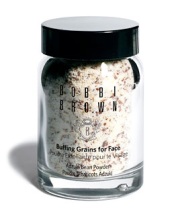
Exfoliation
Exfoliation removes dead skin cells that clog pores and gives skin the appearance of being dull. Removing these cells allows new ones to take their place, giving your skin a healthy glow.
General rule of thumb: Do not exfoliate daily, once to twice a week is enough.
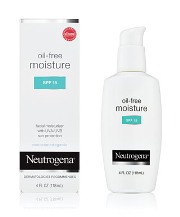
Moisturizer
Between our diet, inherited genes and the environment, it doesn’t take much to cause skin to become imbalanced…mainly dry. Lack of moisture and continued sun exposure leads to premature aging. Skin should be rehydrated, twice daily after cleansing. Your daytime moisturizer must include SPF to protect you from harmful UVA and UVA rays.
General rule of thumb: Apply moisturizer in upward strokes to avoid stretch skin, that causes wrinkling.
In addition to a regular skin care regimen, a proper diet and adequate water intake also contributes to flawless skin.
Now isn’t that worthy of a little daily TLC?